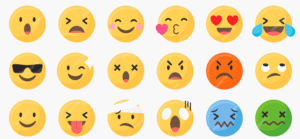
Emotion Detective
Can you guess all the emotions?
Emoji for Digitally Emotion Circulation
Emotion
Emotion is a complex psychological state that influences thoughts, behaviors, and decision-making. It is a fundamental aspect of human experience, shaping interactions and perceptions. Emotions can be broadly categorized into six primary types:
- Happiness: A positive emotion associated with joy and satisfaction.
- Sadness: A feeling of sorrow or disappointment.
- Anger: A strong reaction to perceived threats or injustice.
- Fear: A response to danger, triggering a fight-or-flight reaction.
- Surprise: A brief reaction to unexpected events, which can be positive or negative.
- Disgust: A rejection response to unpleasant stimuli.
These emotions play a crucial role in communication, relationships, and mental well-being.

The Need for Emotion in the Digital Era

In today’s digital world, emotions remain essential despite the rise of AI and virtual interactions.
Humanizing Technology: Emotional intelligence in AI, like chatbots with empathy, improves user engagement.
Social Media & Branding: Emotions drive online behavior—brands use emotional marketing (joy, nostalgia) to connect with audiences.
Mental Health Awareness: Digital platforms promote emotional well-being through therapy apps and supportive communities.
Enhanced Communication: Emojis, GIFs, and voice notes convey emotions in text-based interactions.
Ethical AI Development: Emotion recognition systems must respect privacy while improving human-computer interaction.
Emotions ensure that technology remains user-centric, fostering meaningful connections even in a digitized world. Understanding and integrating emotions in digital advancements will shape a more empathetic and responsive future.
Emoji Recognition
Emoji recognition is the ability of computers and software to understand and interpret emojis. Emojis are small digital images or icons used to express emotions, ideas, or objects in messages. They have become a huge part of online communication, making conversations more fun and expressive. For computers to recognize emojis, they use special algorithms and machine learning models. These models analyze the shape, color, and design of each emoji to identify what it represents.

Emotion recognition also plays a role in accessibility. For people with visual impairments, screen readers can describe emojis aloud. For example, if a message has a crying emoji (😢), the screen reader might say, “Loudly crying face.” This helps visually impaired users understand the emotions in a text. Some apps also use emotion recognition to translate emojis into text or speech, making digital communication more inclusive. Without this technology, many people might miss out on the emotions conveyed in messages.
One of the main uses of emotion recognition is in social media platforms. Apps like Instagram, Facebook, and Twitter use emoji recognition to sort and filter messages. If many people react to a post with laughing emojis (😂), the algorithm may consider it funny and show it to more users. This helps in making social media more interactive and personalized.
One of the main uses of emotion recognition is in social media platforms. Apps like Instagram, Facebook, and Twitter use emoji recognition to sort and filter messages. Some platforms also use emoji recognition to understand user emotions. If many people react to a post with laughing emojis (😂), the algorithm may consider it funny and show it to more users. This helps in making social media more interactive and personalized.
Another important use of emotion recognition is in chatbots and virtual assistants. Many chatbots now understand emojis to make conversations smoother. For example, saying “Send a smiley face to mom” will make the assistant send a 😊 in the message. This makes communication faster and more natural, especially in quick chats.
In the future, emotion recognition could become even smarter. With advances in artificial intelligence, computers may better understand the context behind emoji use. For example, a pizza emoji (🍕) in a food order chat could automatically suggest restaurant options. Some researchers are also working on emotion recognition for sign language translation, where hand gestures could be converted into emojis. As technology improves, emotion recognition will keep making digital communication easier, faster, and more expressive for everyone.